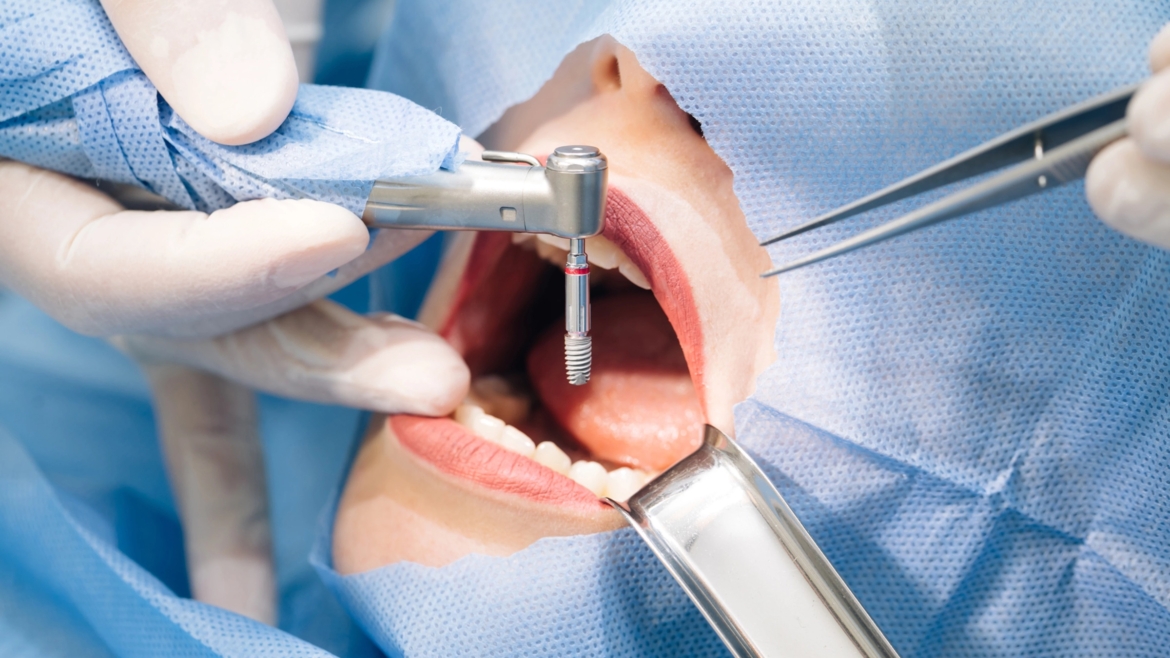
Implantology at Sanodent Clinique
The loss of a tooth is often remembered as a psychologically traumatic experience.
The feeling of diminished self-image, caused by concerns about physical appearance, is often accompanied by the discomfort of difficulty in eating and smiling in public.
After dental implant treatment, patients regain not only their chewing function but also the harmony of their facial features and the aesthetics of their smile.
Today, dental implants remain the only treatment solution that replaces missing teeth and restores up to 99% of natural function and aesthetics.
Benefits of Dental Implants
-
Dental implants prevent bone resorption. After a tooth is lost, natural atrophy of the alveolar bone begins. If no action is taken, this process may lead to complications, including the loss of adjacent teeth. Clinical data shows that bone volume can decrease by up to 50% within the first 3 years after tooth extraction, making surgical interventions more complex and costly afterward.
-
Patients can return to a normal diet, improving overall health.
-
Implants integrate with the bone (osseointegration) within 1–3 months after placement, becoming a stable part of the jaw structure.
-
With proper oral care, dental implants can last a lifetime, making them the best long-term investment for replacing missing teeth.
-
According to international studies, the success rate of dental implant treatment exceeds 98%, depending on implant quality and case complexity.
-
Dental implants increase self-confidence and help maintain optimal oral health.
Dental Implant
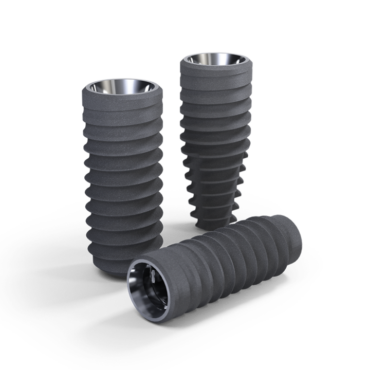
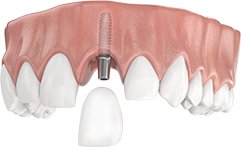
The implant screw, or the implant itself, made of a titanium-zirconium alloy or ceramic, represents the artificial root. It can be used to replace a single tooth or can be integrated into implant-supported bridges.
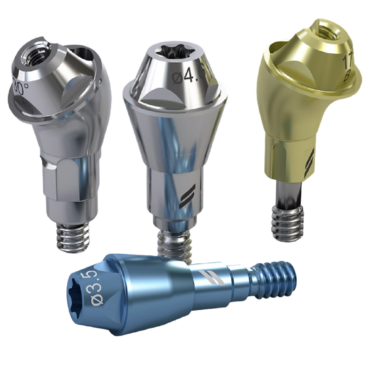
The abutment connects the implant to the artificial tooth. Abutments are specific to each implant system, and it is extremely important that they are original components from the same manufacturer as the implant. Even microscopic misfits can lead over time to inflammation of the peri-implant tissues or fracture of the abutment.

The dental crown represents the aesthetic part of the artificial tooth. It is created in a dental laboratory to closely match the shape and color of the natural tooth.
Dental Implant vs. Other Treatment Methods
For over 70 years, dental implants have been continuously improved, becoming the preferred choice for both dental surgeons and patients.
Temporary solutions such as dental bridges or removable dentures are often more affordable initially and are sometimes chosen primarily because of cost. However, in the long term, these treatments can lead to complications, such as increased bone resorption, which may require more complex implant procedures later.
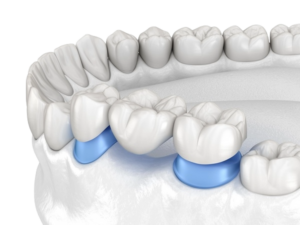
A traditional solution that replaces a missing tooth with a prosthetic work supported by adjacent teeth. This involves preparing (grinding down) two healthy teeth to support a three-unit crown structure.
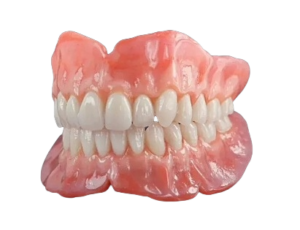
A removable prosthetic solution that rests on the gums to replace missing teeth. It can be made for a full arch or partially, for several missing teeth.
When Does the Dentist Recommend a Dental Implant?
If you have lost at least one tooth or have a tooth that cannot be saved, the primary recommendation of your dentist will be dental implant treatment.
It is important to note that timely implant placement helps prevent bone loss, tooth migration, and other negative effects that can impact both oral health and facial aesthetics.
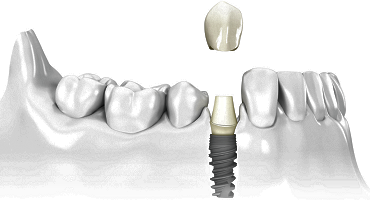
Single Tooth Implant
When a single tooth is missing, it can be replaced with a dental implant. Once the prosthetic restoration is placed, it looks and feels like a natural tooth.
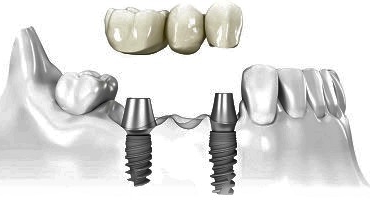
Multiple Dental Implants
When several teeth are missing due to advanced deterioration, the implantologist may recommend multiple implants to restore function while preserving the integrity of the remaining teeth.
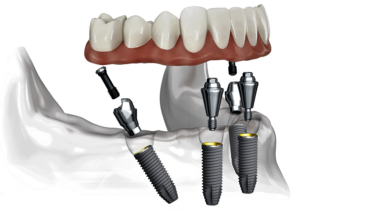
Full Mouth Dental Implants
All-on-4 or All-on-6 systems allow patients to replace one or both dental arches with a new set of fixed teeth. These solutions can provide temporary teeth within 24 hours and are recommended in cases of advanced dental deterioration or total edentulism (complete tooth loss).
Types of Dental Implants
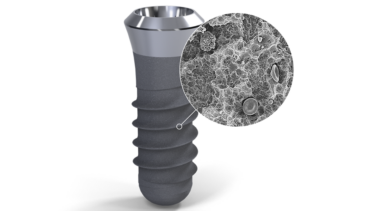
Premium Dental Implant – Straumann® SLA®
Made in Swiss
The classic SLA® surface, introduced in 1998, is based on large-grit sandblasting that creates a macro-rough titanium surface, followed by acid etching that produces a micro-rough surface. Numerous clinical and preclinical studies confirm its excellent long-term performance and reliability, making it one of the most well-documented surfaces in implant dentistry.
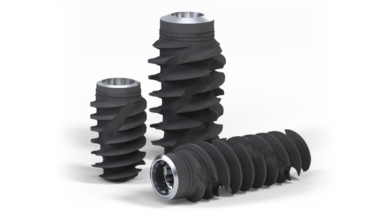
Premium Dental Implant – Straumann® BLX
Made in Swiss
Straumann® BLX implants offer confidence combined with efficiency. Developed through over 35 years of scientific research in oral rehabilitation, they allow immediate loading and are suitable for all bone types. The manufacturer provides a lifetime warranty.
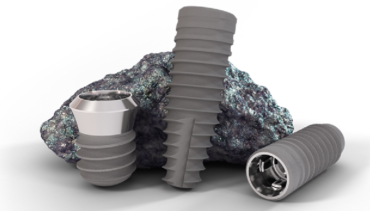
Premium Dental Implant – Straumann® BLX Roxolid®
Made in Swiss
Roxolid® is a high-performance alloy composed of 15% zirconium and 85% titanium, specially designed for dental implantology. It offers superior strength and excellent osseointegration, allowing for less invasive treatments. Its enhanced mechanical resistance provides more treatment options, especially for small-diameter implants.
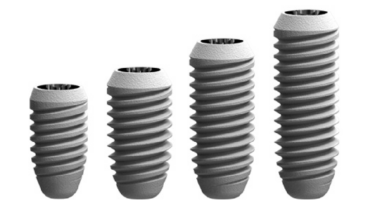
Basic Dental Implant – Argon K3PRO® Rapide / Sure / Short
Made in Germany
A German implant system designed to minimize bone loss, featuring self-tapping threads and an OsteoActive surface for fast and reliable osseointegration. The tight conical (Morse Taper) connection between the implant and abutment ensures micro-gap sealing and reduces micromovements, one of the causes of peri-implantitis.
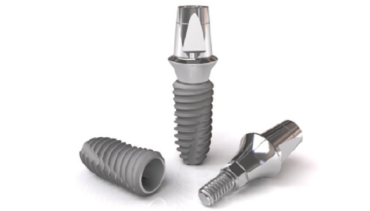
Basic Dental Implant – Dentium SuperLine III SLA
Made in South Korea
The SuperLine III implant from Dentium features a tapered design that promotes an excellent bone response, anatomical compatibility with surrounding bone, and a large contact surface, ensuring outstanding primary stability, even in augmented sinus cases.
Technologies Used in Dental Implant Treatment
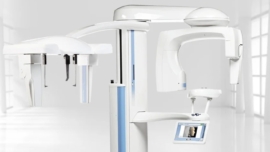 3D tomography (CBCT) provides detailed images of the teeth, roots, and bone structures, allowing the orthodontist to accurately analyze the position of impacted teeth, the relationship between dental arches, and the available space. This enables precise, personalized, and more efficient orthodontic treatment planning, reducing risks and ensuring predictable results.
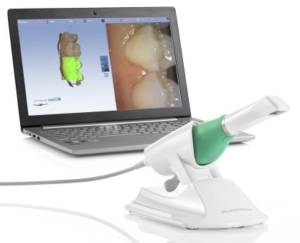 The Planmeca Emerald intraoral scanner performs a fast scan of the oral cavity, generating a 3D model of the dentition, which is used for precise orthodontic treatment planning and monitoring its progress.
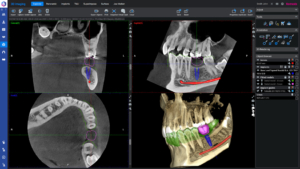
The Romexis software integrates 3D computed tomography, intraoral scanning, and the implant manufacturer’s database, providing precise planning for dental implant placement.
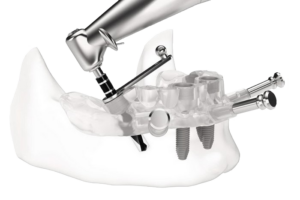
The Romexis software integrates 3D computed tomography, intraoral scanning, and the implant manufacturer’s database, providing precise planning for dental implant placement.
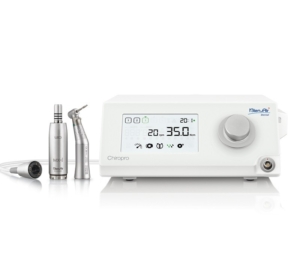
Stages of Dental Implant Treatment
To determine whether dental implant treatment is suitable, a specialist consultation is performed. The oral examination, along with clinical radiological investigations (CBCT – cone beam computed tomography), forms the basis of an optimal treatment plan.
A specialized software program based on CT imaging allows for 3D digital simulation of implant placement, ensuring precision and accuracy during the procedure. Based on these simulations, the doctor will determine the type of implants to be used and the course of the surgical intervention.
For patient safety, a set of standard medical tests is required. If the results are not satisfactory, the doctor has the responsibility to inform the patient and reschedule the intervention.
Cavities and infections of adjacent teeth are treated prior to implant placement.
Additionally, before the procedure, the patient must undergo a professional dental hygiene session in the clinic to ensure that teeth and soft tissues are cleaned and bacteria are removed.
Before the procedure, the patient will receive an Informed Consent Form (detailing the procedure) and a General Health Assessment Questionnaire, ensuring that they are fully informed and can provide consent for treatment.
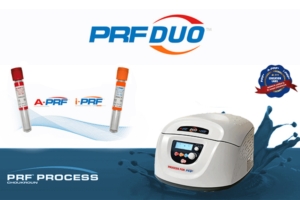
In complex cases (such as sinus lifting or bone grafting), the use of A-PRF technology is recommended. This involves creating a membrane from the patient’s own blood (directly in the clinic), which is used in modern dentistry to accelerate the healing of surgically treated areas.
On the day of the procedure:
-
If primary implant stability is achieved, the patient receives a temporary restoration.
-
Dental implants such as Straumann, Neodent, Dentium, and Argon K3Pro allow immediate placement after tooth extraction, depending on the implantologist’s decision at the time of extraction.
-
For patients with complete edentulism treated with All-on-4 or All-on-6 systems, a temporary prosthetic restoration can be provided within 24 hours.
-
After the procedure, the patient receives a free follow-up OPG (panoramic digital X-ray) and CBCT scan.
7–10 days after the procedure:
-
Depending on the complexity of the case, sutures are removed 7–14 days after implant placement.
Final Restoration
The duration of final prosthetic restoration depends on the type of implant and case complexity:
-
Fast-integration implants such as Straumann SLA Active receive the final prosthetic restoration approximately 2 months after the procedure.
-
In complex cases involving bone grafting and sinus lifting, final restoration is completed after 6–9 months.
-
For All-on-4 or All-on-6 implant systems, the final prosthetic work is completed within 4–6 months.
Quality Guarantee
At the end of the prosthetic treatment, Sanodent Clinique provides the patient with a Quality Assurance Certificate. This document includes recommended periodic check-ups, certifies the quality of the medical act, and offers a guarantee for the performed treatment.
Recovery and Recommendations After Dental Implant Treatment
For most patients undergoing simple procedures, postoperative discomfort is minimal. Following the doctor’s recommendations is essential to prevent possible complications.
In the case of complex surgical procedures, patients may experience discomfort in the treated area, such as gum inflammation, swelling, minor bleeding, and possible bruising.
To relieve pain and reduce inflammation, the doctor will prescribe medication and, if necessary, antibiotic treatment.
To avoid potential complications, patients should follow these instructions provided by the dentist:
-
After the procedure, apply a cold compress to the cheek to reduce swelling.
-
Follow all instructions given by your doctor.
-
To prevent inflammation, avoid touching the treated area with your tongue. A positive postoperative sign is the gradual decrease in sensitivity.
-
Do not use an electric toothbrush under any circumstances. Manual brushing can be resumed according to the doctor’s instructions, even from the first day after the procedure, in order to prevent bacterial plaque buildup. For the treated area, it is recommended to use a soft-bristled toothbrush.
-
Avoid consuming hot foods and drinks until the effect of anesthesia has worn off.
-
Avoid flour-based foods, as they can stick to the gums and cause inflammation.
-
Until the sutures are removed, it is recommended to consume soft foods.
-
During the first seven days after surgery, avoid coffee and alcohol, as they may increase the risk of bleeding.
-
Avoid smoking as much as possible, as it can lead to serious complications, including implant failure.
-
Regular check-ups scheduled by your dentist remain mandatory
Questions & Answers:
1. Who can benefit from a dental implant system?
Dental implant systems are recommended for patients who are missing at least four teeth or who have been advised to wear a dental prosthesis as an alternative.
2. How long does the treatment take?
Sanodent Clinique offers advanced treatments using state-of-the-art technologies. In many cases, patients can benefit from smile reconstruction in just 24 hours with the help of dental implant systems.
3. Is the implant procedure painful?
Thanks to local anesthesia, the implant procedure is completely painless.
4. Am I too old for dental implants?
Age is not a limitation for dental implant treatment. However, only a specialist in implantology can determine your eligibility. A medical history review is required to provide detailed guidance throughout the treatment process.
5. Will I experience pain after the procedure?
After the implant procedure, patients generally do not experience pain and can resume daily activities without discomfort.
6. How will I look after the treatment?
Our doctors are certified in implantology and dental aesthetics and use the most advanced techniques to deliver the desired smile. With the help of CT scans, intraoral scanners, and digital smile design, patients can see from the very first consultation where the implants will be placed and how their smile will look after treatment.
7. How long does the implant procedure take?
The placement of a single dental implant usually takes about one hour.
8. How long does a dental implant last?
The lifespan of a dental implant depends on several factors, including the type of implant, the patient’s biological response, the dentist’s expertise, and post-treatment oral hygiene. Premium dental implants (such as Straumann or Nobel Biocare), when properly placed and maintained with regular check-ups every 6 months, can last over 40 years. Good oral hygiene plays a crucial role in longevity.
9. Can the body reject a dental implant?
The body does not reject dental implants. However, poor oral hygiene, lack of regular dental visits (at least twice a year), and harmful habits such as smoking can lead to implant failure. Proper care ensures a high success rate.
10. When can I get a dental implant after tooth extraction?
Doctors at Sanodent Clinique usually recommend a healing period of 3–4 months after extraction. In some cases, implants can be placed immediately after extraction, during the same session, depending on bone availability and the presence of infection.
11. How long does it take for a dental implant to heal?
The healing period typically ranges from 4 to 6 months, depending on the patient’s biological response. However, normal daily activities can be resumed immediately after the procedure.
12. When are the sutures removed after implant surgery?
Sutures are usually removed 7–10 days after the procedure, depending on its complexity.
13. Do I need medical leave after dental implant surgery?
Medical leave is generally not necessary. Patients can resume their daily activities immediately after the procedure.
14. Will the implant feel like a natural tooth?
Yes, dental implants look and feel like natural teeth. Through the process of osseointegration, the implant becomes part of the bone and functions like a natural root.
15. Can people with diabetes get dental implants?
Patients with controlled diabetes and stable blood sugar levels can undergo implant treatment. Certain types of implants, such as Straumann, are especially suitable because their surface promotes faster healing.
16. What is the success rate of dental implants?
Globally, dental implants have a success rate of approximately 98%.
17. What type of anesthesia is used during the procedure?
Local anesthesia is typically used. In special cases, such as highly anxious patients, general anesthesia may be considered.
18. How many implants are needed for a fully edentulous patient?
For fully edentulous patients treated with All-on-4 or All-on-6 systems, approximately 10 implants are required (4 for the lower jaw and 6 for the upper jaw) to restore a complete smile.
19. What is the best dental implant?
The best dental implant is the one that suits your individual needs. Your dentist will recommend the most appropriate options. Premium implants are often preferred by both doctors and patients due to decades of research, durability, fast osseointegration, and excellent aesthetics.