
Root Canal Treatment
Specialized endodontists perform root canal treatment with the aim of saving a natural tooth that is severely decayed and whose internal structure is infected and inflamed.
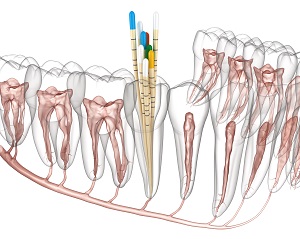
During root canal treatment, the dentist removes the affected nerve (dental pulp), cleans and disinfects the root canal, thus preserving the natural tooth and preventing the need for extraction.
A severely decayed and weakened tooth that has undergone root canal treatment must be protected with a prosthetic restoration (EMAX or Zirconia dental crown) to prevent fracture over time.
At Sanodent Clinique, root canal treatment is performed under a dental microscope and local anesthesia, with the consistent use of a rubber dam. Effective isolation of the tooth ensures a significantly better long-term prognosis. The use of a rubber dam prevents intraoperative contamination with saliva and allows for optimal adhesion of the filling material. The length of the root canal is measured electronically, enabling the dentist to determine precisely the extent of the root canal filling.

Questions & Answers:
What are the most common causes of dental pulp (nerve) infections?
-
Deep cavities caused by excessive accumulation of tartar and bacterial plaque as a result of improper oral hygiene;
-
Fractured teeth resulting from accidents or trauma;
-
The first sign that your tooth is seriously affected and that the dental pulp is involved is intense tooth pain.
How long does root canal treatment take?
Depending on the severity of the infection, endodontic treatment can be completed in one to a maximum of three visits. It is a relatively simple procedure, performed in strict accordance with clinical protocols, and the patient does not experience discomfort or pain in the treated area.
In cases where the infection has severely affected the dental pulp, the patient may experience a dull pain after the procedure, which typically subsides within a maximum of 7 days.
Is pain normal after endodontic treatment?
Pain after root canal treatment may occur immediately and can last from three days up to three weeks. In rare cases, delayed pain may appear, usually caused by a new source of infection. In such situations, a control X-ray is performed to determine the cause of the discomfort.
The progression of pain is an important indicator; typically, post-treatment pain should gradually decrease over time.