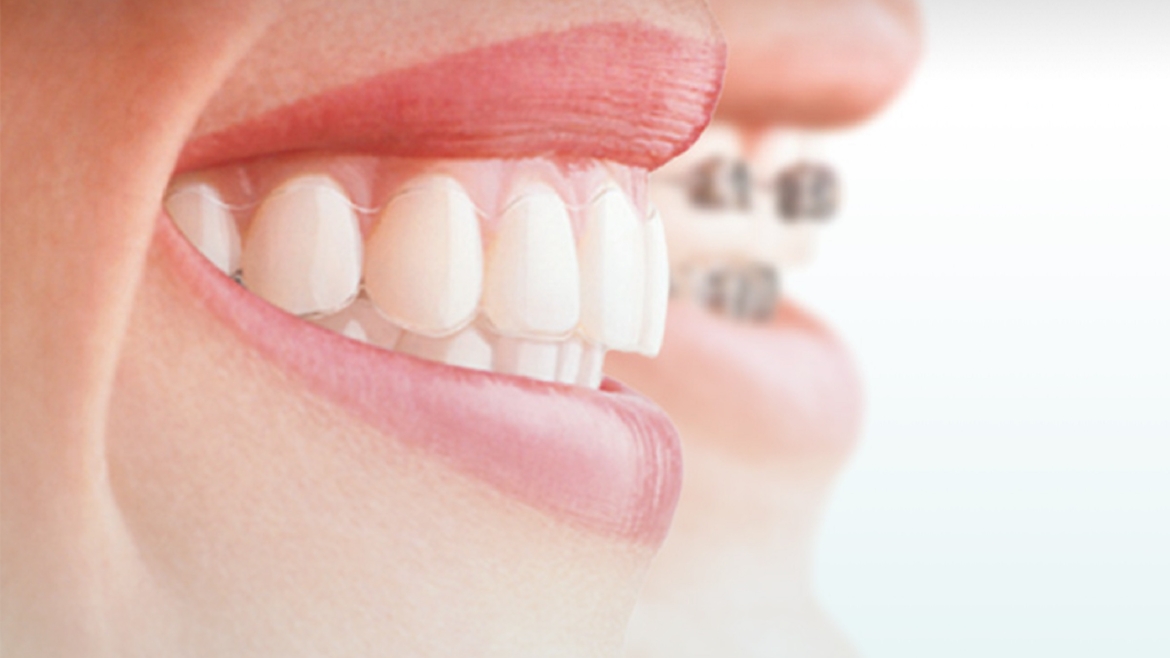
Spoiler: it depends on the complexity of the case.
Installation
Braces allow us to correct dental imperfections, move teeth into the desired position, and even bring canines or incisors back into alignment. They are effective for patients of all ages.
Aligners are not suitable for all patients, as not every orthodontic case can be solved with them. The difference lies in the amount of pressure required to significantly change the bite. Aligners are usually used to correct minor orthodontic issues.
Aesthetics
Braces are often visible to others, even though they can be equipped with transparent systems.
Aligners are easy to remove and are almost invisible. Many patients choose them specifically for this aesthetic advantage.
Food Restrictions
After braces are installed, patients receive a list of foods that should be avoided, as they may damage the orthodontic system.
When wearing aligners, there are generally very few food restrictions. However, your dentist may still recommend avoiding certain foods.
Care Instructions
Taking care of braces requires the use of special brushes and an oral irrigator.
Cleaning aligners is easier — you only need to use a regular toothbrush and rinse them afterward.
Effectiveness
There is no definitive answer.
Both systems are prescribed depending on the complexity of the case and the patient’s preferences. The more complex the case, the more likely it is that braces will be recommended.
If you are unsure which option is best for you, we invite you to visit our clinic for a consultation. Our specialists will perform the necessary examinations and recommend the best solution for your situation.